Tag: gravel

  • Test de résistance au roulement des pneus de gravel.

    Test de résistance au roulement des pneus de gravel.

    Enfin un test de pneus de gravel.

    Trouver le bon pneu de gravel est un défi de taille. il y a tellement de choix, de paramètres, que cela peut devenir difficile de prendre une décision.
    On peut choisir un pneu selon plusieurs critères. La résistance au roulement en est un. On peut aussi choisir un pneu de gravelle en fonction de sa fiabilité, son poids, sa facilité d’installation, le confort, son profil de crampons, le style et la couleur.

    Je me suis donc lancé dans ce projet ambitieux, afin de tester 3 modèles de pneus de gravel afin de déterminer lequel est le plus rapide, ou du moins, celui qui offre la moins grande résistance au roulement sur une surface de gravelle.

    Il existe quelques tests similaires, la plupart fais en laboratoire mais je n’en ai pas trouvé qui ont été fait dehors et sans biais de commandites ou de lien affiliés.

    Les pneus testés aujourd’hui:

    • Continental Terra Speed. 700×45
    • Vittoria Terreno Dry. 700×40
    • Panaracer GravelKing X1 2024. 700×45

    J’ai choisi ces pneus pour les raisons suivantes:
    -Le Vittoria Terreno Dry est équipé de série sur plusieurs vélo, il est donc plutôt commun.
    -Le Terra Speed a toujours été très populaire depuis sont lancement et est maintenant offert en 700×45, ce que beaucoup attendaient avec impatience. Il a la réputation d’être le pneu cramponné le plus rapide sur le marché.
    -Le Gravel King de Panaracer est un des premiers pneus de gravel ”mainstream” et la nouvelle version méritait d’être testée. C’est un pneu souvent négligé, pour plusieurs raisons. On va voir si cette nouvelle version,le X1, deviendra populaire grâce à son nouveau design de crampons. Vous pourrez lire mes premières impressions dans un autre article bientôt.

    Le test

    Il a fallu un avant midi complet pour tester les 3 pneus (en paire évidemment). J’ai donc installé 3 paires de pneus dans le stationnement du parc Frédéric Back avec une pompe réservoir (la Lezyne Pressure Overdrive). C’était un peu sportif!

    La pompe Pressure Overdrive de Lezyne
    La gauge digitale Honest de Blackburn

    Voici comment j’ai testé les 3 pneus.

    • Le montage a été fait sur la même paire de roues.
    • Largeur interne 27mm.
    • Jantes en carbone Hookless.
    • J’ai utilisé un insert dans chaque pneu.
    • Montage tubeless évidemment, avec 30ml de scellant dans chaque pneu.

    J’ai ensuite fais une multitudes de boucles du parc, donc 5.35km par tour, en respectant les conditions suivantes:

    • Un premier tour à 25km/h avec 29psi dans chaque pneu.
    • Un deuxième tour à 30km/h avec 29psi dans chaque pneu.
    • Un troisième tour à 30km/h avec 26psi dans chaque pneu.
    • Le capteur de puissance a été fréquemment calibré.

    Résultats

    Le Continental Terra Speed porte bien son nom. J’ai eu du mal à respecter la vitesse de 25km/h que j’avais planifiée pour le premier test. Et je n’ai presque pas perçu la différence d’effort requis pour passer de 25km/h à 30km/h.

    Comme c’était le premier test de la journée, supposons que j’avais de bonnes jambes.

    C’est donc le nez collé à mon Garmin que j’ai fait mon premier test.

    Le profil de crampons minimaliste.
    Le Continental Terra Speed avec flancs beiges.


    Voici les résultats:

    25km/h à 29psi:

    • Moyenne: 25.84km/h
    • Moyenne: 156 watts
    • Moyenne normalisée: 195 watts
    • Temps: 12:35
    • Temps en position assise: 12:27

    30km/h à 29psi:

    • Moyenne: 30.86km/h
    • Moyenne: 226 watts
    • Moyenne normalisée: 255 watts
    • Temps: 10:30
    • Temps en position assise: 10:16

    30km/h à 26psi:

    • Moyenne: 30.91km/h
    • Moyenne: 226 watts
    • Moyenne normalisée: 255 watts
    • Temps: 10:30
    • Temps en position assise: 9:47

    Malgré une bande de roulement aux apparences symétriques, le Continental Terra Speed est bel et bien directionnel.

    Il faut donc l’installer dans le bon sens de rotation pour en tirer le maximum de performance et de rendement.

    Conclusions

    Le Continental Terra Speed est un pneu très rapide. En effet, selon le site tirerollingresistance.com; le Terra Speed en 700×45 est plus rapide qu’une multitude de pneus de route lisses, et ce malgré la présence de crampons.

    Il faut avouer que la taille des crampons est plutôt petite. Et les crampons latéraux ne permettent qu’une faible accroche latérale. D’ailleurs, déception, le 700×45 mesure 43 sur mes jantes, qui font pourtant 27mm de largeur interne. Je suspecte que le pneu s’écrase, à basse pression, et adopte sa largeur réelle ainsi.

    Par contre, la traction et l’adhérence peut être obtenue en réduisant la pression, ce qui permet au pneu de se déformer et de mieux épouser terrain. Il n’y a aucune pénalité à réduire la pression sur le Continental Terra Speed et c’est ainsi que vous en tirerez le maximum.

    Qui sait si la résistance de roulement ne serait pas identique à une pression encore plus basse. À vous de tester!


    Vittoria Terreno Dry

    Le Vittoria Terreno Dry, présenté ici dans sa version 2.0, est un pneu relativement passe-partout et efficace. Un look sobre, un design de crampon hybride, avec accroche latérale cramponnée et une bande de roulement relativement lisse.

    On remarque, visuellement, que la bande de roulement est relativement épaisse, ce qui met en confiance coté résistance aux crevaisons.
    Depuis que Vittoria a adopté le standard ETRTO, leur pneu sont devenus très facile à installer en montage Tubeless et sont très fiables.

    Surprise, Le 700×40 mesurait 42 sur mes jantes. C’est aussi le seul pneu avec un profil relativement ”carré”, qui s’écrase à plat sur le terrain, comme un boyaux.

    On remarque le design polyvalent du Terreno Dry.
    Le Terreno Dry avec flancs beiges.

    Voici le tableau des résultats.

    25km/h à 29psi:

    • Moyenne: 25.89km/h
    • Moyenne: 163 watts
    • Moyenne normalisée: 189 watts
    • Temps: 12:16
    • Temps en position assise: 12:29

    30km/h à 29psi:

    • Moyenne: 30.64km/h
    • Moyenne: 236 watts
    • Moyenne normalisée: 261 watts
    • Temps: 10:34
    • Temps en position assise: 10:25

    30km/h à 26psi:

    • Moyenne: 30.58km/h
    • Moyenne: 243 watts
    • Moyenne normalisée: 266 watts
    • Temps: 10:31
    • Temps en position assise: 10:25

    Le vittoria Terreno Dry est aussi un pneu qui a été conçu avec un sens de rotation.
    On peut facilement voir les crampons latéraux, qui donnent au pneu son caractère rassurant en virage.

    Conclusion

    Le Terreno Dry de Vittoria est un excellent pneu ”all-around” qui cependant, donne des résultats de résistance au roulement un peu plus élevés que le Terra Speed.
    C’est aussi le seul pneu dont la résistance au roulement augmente en réduisant la pression.

    Par expérience, ce pneu est aussi très lent sur l’asphalte à une pression de 29psi ou moins. Malgré cela, c’est un pneu qui mets en confiance et qui est prévisible.

    Compte tenu que les championnats du monde de gravel ont été remportés avec le Vittoria Terreno Dry, il serait intéressant de tester la résistance au roulement à des pressions plus élevées.


    Panaracer Gravel King X1

    Je découvre le Gravel King dans sa nouvelle mouture, qui apparemment est plus raffinée, plus rapide et qui propose un cramponnage amélioré.
    Le Gravel King est un classique devenu peu populaire car beaucoup de pneus plus modernes ont pris le marché d’assault et l’engouement pour ce pneu Japonais s’est estompé au fil du temps. La première version était aussi relativement capricieuse à l’installation et exigeait patience et détermination lorsqu’on voulait le monter Tubeless. De plus, le pneu avait la réputation de projeter les petits cailloux qui se coinçaient entre les crampons vers l’arrière, ce qui rendait l’expérience plutôt pénible pour les cyclistes autour.

    Le design élaboré de crampons du X1
    Une étiquette plutôt jolie. Fait au Japon.

    Voici les résultats.

    25km/h à 29psi:

    • Moyenne: 25.89km/h
    • Moyenne: 156 watts
    • Moyenne normalisée: 185 watts
    • Temps: 12:36
    • Temps en position assise: 12:00

    30km/h à 29psi:

    • Moyenne: 30.43km/h
    • Moyenne: 227 watts
    • Moyenne normalisée: 255 watts
    • Temps: 10:32
    • Temps en position assise: 10:13

    30km/h à 26psi:

    • Moyenne: 30.85km/h
    • Moyenne: 224 watts
    • Moyenne normalisée: 247 watts
    • Temps: 10:28
    • Temps en position assise: 10:06
    La flèche qui indique le sens de rotation.

    Le pneu Gravel King X1 est aussi directionnel. Malgré la taille minimaliste de la flèche, le design de crampon permet tout de même de facilement deviner le sens de rotation.

    Le Gravel King X1 s’est avéré le pneu le plus difficile à installer.

    Conclusion

    Le nouveau Gravel King est un pneu surprenant! Confortable et prévisible, offrant une accroche latérale surprenante. Idéal pour ceux qui recherchent un pneu qui mets en confiance, particulièrement en virage sur gravelle douce.

    En chiffres: ce pneu, comme le Terra Speed, s’est avéré un peu plus rapide à plus basse pression. La sensation à plus basse pression était excellente. On peut sentir le pneu se déformer et mordre dans la gravelle ce qui donne cette sensation rassurante et prévisible.

    Je n’ai pas eu le temps de tester la gomme sur l’asphalte, alors je mettrai à jour cet article éventuellement.

    Aussi, Il semblerait que Panaracer a amélioré son design de crampons: le nouveau Gravel King ne lance (presque) plus de cailloux vers l’arrière.


    Et le gagnant est…

    Considérant l’infime écart qu’il y a entre chaque modèle, est-ce réaliste de déclarer un gagnant? Probablement pas.

    Après tout, ce test n’est probablement pas le plus fiable, puisqu’il faut prendre en compte le vent qui varie constamment, l’achalandage des autres usagers du parc, puis ma fatigue cumulée au fil des tests qui influence ma perception.

    Si on observe seulement les données obtenues (en watts), on peut classer ex-aequo, au premier rang, le Continental Terra Speed et le Panaracer Gravel King.

    À prendre avec des pincettes.

    Plus de Graphiques!

    Comparaison des courbes de puissances à 25km/h – 29 psi
    Comparaison des courbes de puissances à 30km/h – 29psi
    Comparaison des courbes de puissances à 30km/h – 26psi

    Comparatif final (non-corrigé)

    Panaracer Gravel King X1

    • Moyenne: 30.85km/h
    • Moyenne: 224 watts
    • Moyenne normalisée: 247 watts
    • Temps: 10:28
    • Temps en position assise: 10:06
    • Facilité de montage:
      3/5
    • Taille annoncée: 700×45
    • Taille mesurée: 700×44

    Continental terra Speed

    • Moyenne: 30.91km/h
    • Moyenne: 226 watts
    • Moyenne normalisée: 255 watts
    • Temps: 10:30
    • Temps en position assise: 9:47
    • Facilité de montage:
      3/5
    • Taille annoncée: 700×45
    • Taille mesurée: 700×43

    Vittoria Terreno Dry

    • Moyenne: 30.58km/h
    • Moyenne: 243 watts
    • Moyenne normalisée: 266 watts
    • Temps: 10:31
    • Temps en position assise: 10:25
    • Facilité de montage:
      4/5
    • Taille annoncée: 700×40
    • Taille mesurée: 700×42

    Comparatif du data à 30km/h – 26 psi

    Note importante.

    Je dois souligner que la paire de Vittoria Terreno Dry et les inserts vittoria, ainsi que le scellant, m’ont été offerts par Vittoria. C’est en partie grâce à leur aide que j’ai pu faire ce test.

    Les autres pneus ont été acheté en boutique (localement).

    Jamais Vittoria n’a eu d’influence sur le contenu produit, soit écrit ou visuel.

    J’en profite tout de même pour les remercier de leur confiance et leur support.

  • The Rift – the Icelandic bike adventure (part 1)

    The Rift – the Icelandic bike adventure (part 1)

    When Gravel cycling was still a marginal thing, (that is before Gravel became the new Fixie, aka before Gravel events became the Pros retirement plan) I came across this unique cycling event and I was hooked right away. My first thought was… cycling in Iceland? In Fact, I knew very little about Iceland, besides the usual. I did not even think there was a cycling scene over there.

    One day, GCN covered The Rift and I knew right away, after watching the video, that I had to attend one day. It sure felt like this event would become an unforgettable experience in one of the most breathtaking place on Earth.

    As Iceland is nicely situated between Canada and Europe, the event attracts people from everywhere and in growing numbers. The 2021 event had 200 participants and the 2023 version more than 500. (for the 200km distance)

    And the fact that Iceland has the potential to be cold, windy, covered with snow at any time of the year made it more attractive, even though I absolutely despise Canadian winters. It just felt like this could be a great event and a great cycling adventure.

    What makes The Rift special?

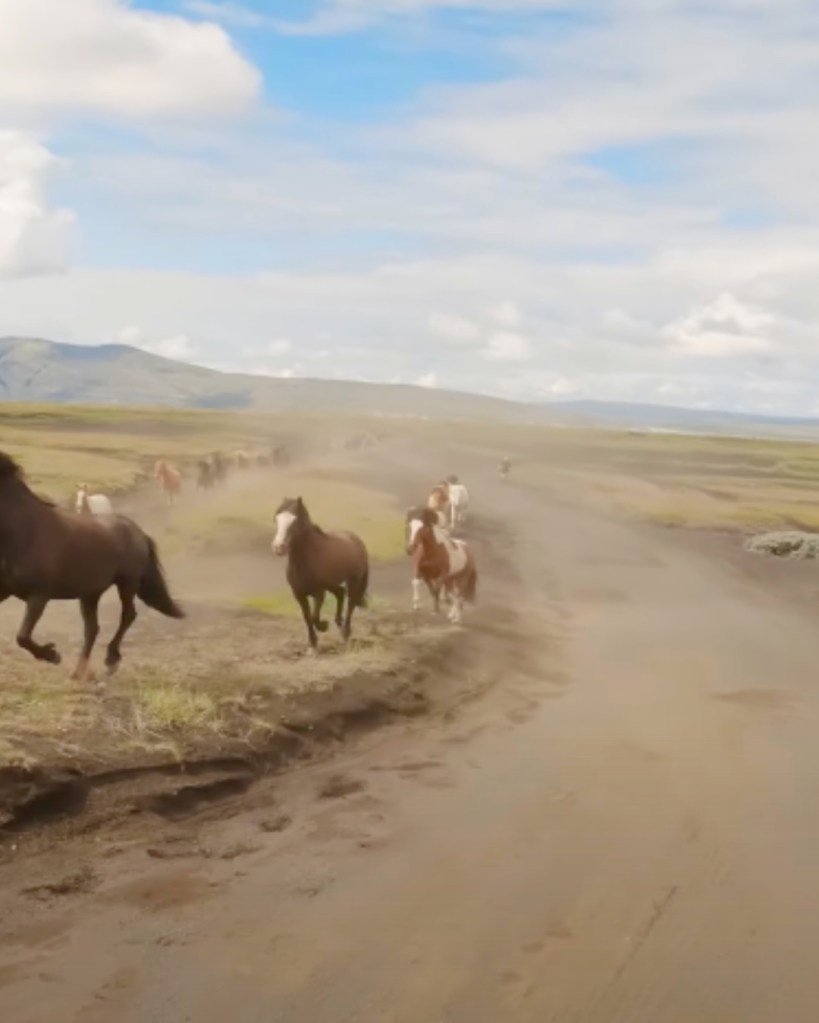
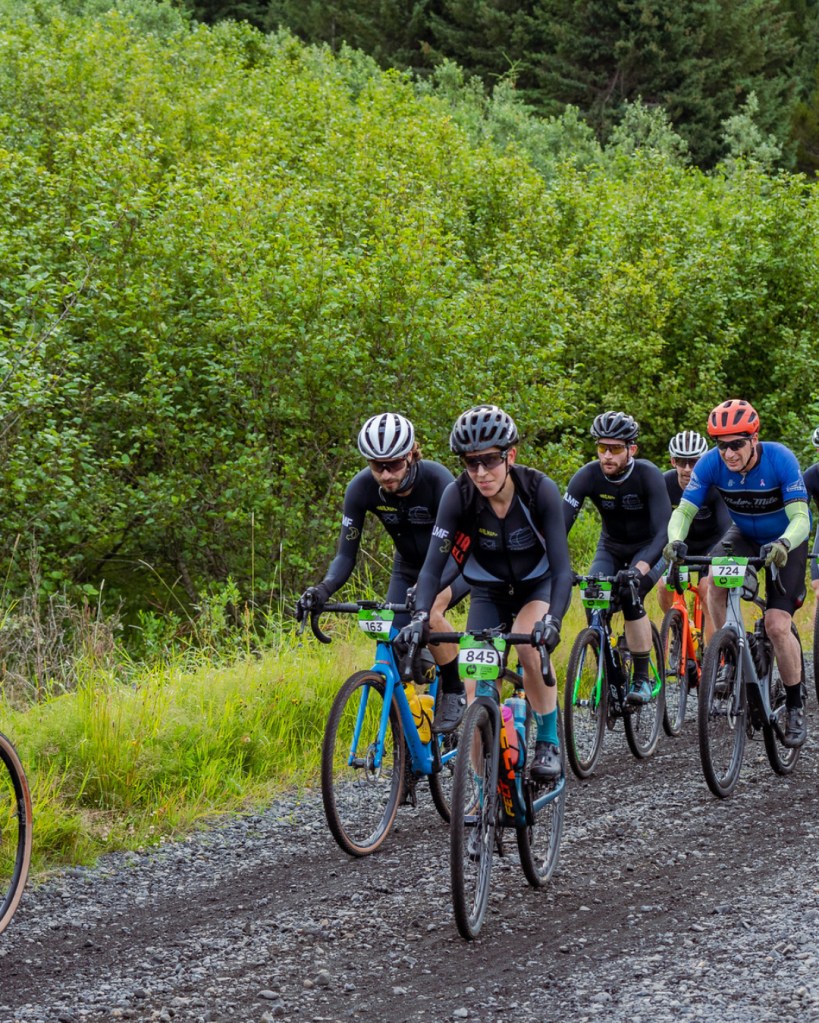
    The Rift is not your average gravel bike race. It covers a distance of 200 kilometres through the rugged terrain of Iceland, including lava fields, glaciers, and volcanic landscapes. There is a pretty cool portion where you ride down a snow covered Volcano. Riders must navigate gravel roads, Uber cold river crossings, and challenging climbs, some you can only go up by walking. All that, and much more unpredictable events and weather making the Rift a true test of skill and endurance. In 2022, a pack of wild horses ran beside the riders in a valley… it was spectacular.

    My friend Max crossing a river during the 2022 edition.
    The same river crossing a few minutes later. Heavy rain and high winds quickly replaced the sunny weather.
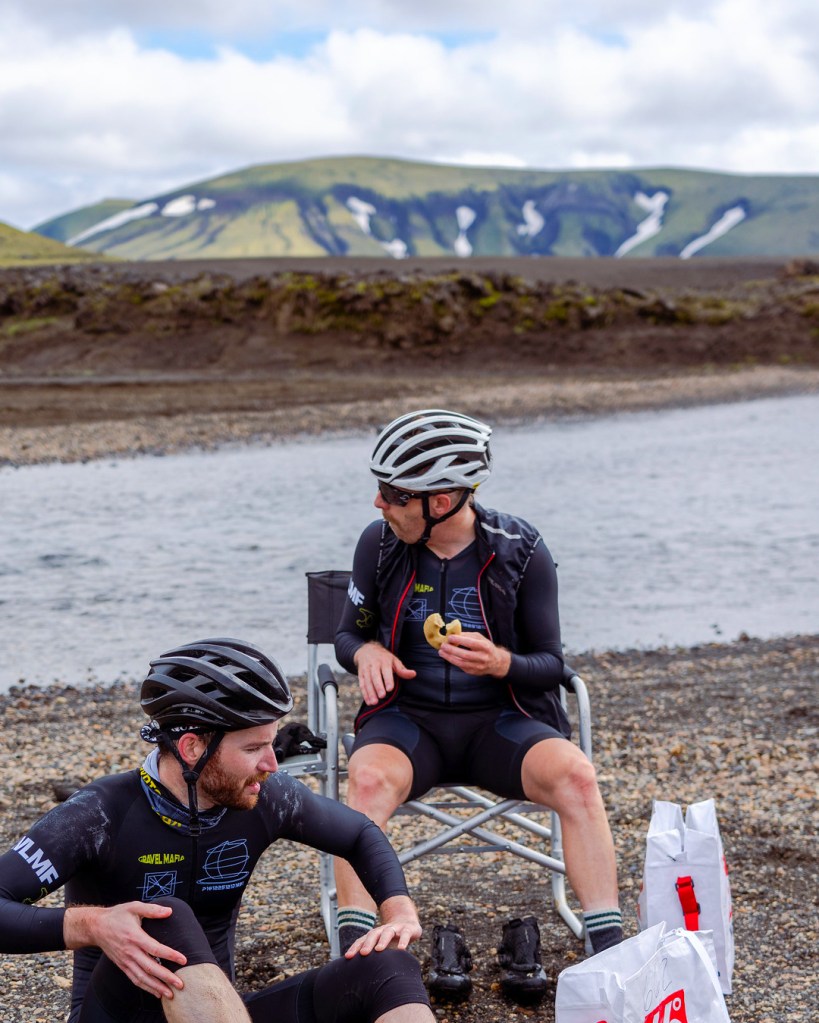
    My friend Charles got this shot while riding.

    In a matter of a few minutes, you can be riding under a sunny sky, shortly followed by a sudden and heavy rain fall or Hail, strong winds which of course will always be against you. The first 100km are going up. Not by much, as the total elevation is 2165m but most of the climbing is within the first half. Let’s just say that after 180km, the final remaining inclines hurt. A lot.

    More about the terrain and the course later.

    How can you prepare for The Rift?

    Well, that comes down to preparation. I’d sum this up like this: There are different aspects you need to prepare to succesfully complete The Rift. To tackle The Rift without suffering too much, you must be in a close to top physical condition. Additionally, you must have the right gear. Finally, you must manage your food intake regardless of the weather conditions.

    1- Training

    Training for long-distance gravel riding is something you should consider hiring a coach for. At least consider it. I know that modern cycling trends are pushing cyclist to ride longer and longer than ever. But still, 200km of road biking and 200km of gravel in Iceland is quite different.

    2- Bike and Gear preparation

    Obviously, if you travel all the way to Iceland with your bike to participate in a potentially once in a lifetime event, you must make sure your bike is in top condition. Duh.

    The Bike Stuff

    On top of having a bike in perfect condition, you must get familiar with how your bike works, what kind of parts are on it and have a minimal knowledge of how to fix it. Honestly, this is something The Rift organization does not mention enough in their Race guide.

    The Rift is a long event, you will be in the middle of nowhere, with little to no cellular coverage. You must be ready to fix almost anything on your bike, on your own. So learning how to fix a flat tire, repair a broken chain, install a tube in a torn tubeless tire, quickly bend back a disc, align your stem/handlebar assembly are just a few of the mechanical operations you should know how to do. You might have to perform any of these under conditions that are not the best. Imagine having to fiddle with a chain tool with frozen hands in windy and snowy conditions… I really do not want to scare anyone, but better be prepared than not.

    River crossing is pretty fun, but it can also mean the end of your ride if you crash on the derailleur side and break drivetrain components.

    In 2022, my first and only participation, I repaired 3 punctures (not even mine) and fixed a ben rim with a can opener and a volcanic rock. I had Tubeless sealant all over my gloves and rode 80km with a tubeless insert around my back. I helped a pro rider who had 8 punctures and needed a new wheel (I don’t know how he got a new wheel to finish his event). I mean… come one dude. That guy was not ready. Make sure your bike is in good condition and ready for a 200km gravel ride.

    Then, you must prepare your spare parts and repair kit. In essence, I strongly recommend that you pack these things, add more if you need more, but these would be the essentials:

    -Spare Derailleur Hanger
    -Chain breaker
    -Quick link
    -Multi-tool
    -Some sort of tubeless Repair kit (plugs and tire patch)
    -Mini-pump and Co2 cartridges.
    -Ultra-light spare tubes. The new Pirelli tubes are great. Super light, very compact. Worth the very expensive price.
    -Spare valve core
    -Small knive

    Once you got your repair kit ready, practice repairing stuff on your bike with it. It will be worth it.

    The riding Gear

    Finding the right clothes to wear for an event where about every type of weather conditions are expected is a challenge.

    If you are like me, IE not an outdoor, trekking, camping and mountaineering specialist, you will need to find the right gear to be comfortable and ready for anything. Which means understanding rainproof materials, merino wool, and find the best clothing you can for the budget you have. One great thing about The Rift is that they allow you to pack a small bag, which most people refer to as the ”sock bag”, that they will bring up to the 3rd feed (at 100km). Prior to the start, you can drop your bag, containing whatever you filled it with, in a huge truck. Unless you plan on winning the race as a Pro or in your age category, I’d strongly recommend taking advantage of this.

    The 100km feed (3rd) where you can grab your spare socks bag.
    Long sleeve skinsuits are excellent for the Rift.

    Typically, you would put in there a pair of warm socks (perhaps the ones the organization provides with each entry), spare gloves, maybe some food and a dry Buff. If you left with too much stuff, you can drop it in the bag and recuperate it at the end of the event. Whatever you think you need, put it in there. Better pack that bag with loads of stuff you won’t use than regret not packing it later. You could even cram a spare tube in there just in case.

    Because the weather changes so much, your clothes must allow you to ride comfortably in all those conditions. You will cross many rivers, walk up steep hills, run in loose snow and much more. So there is little you can do against all that. Compromise is key, I guess.

    Here are the clothing accessories that I think are essential:

    -Super light packable Gore-Tex-ish jacket.
    -Well padded long finger gloves
    -Super light short sleeve vest
    -Long socks of any type
    -Good Gravel/mountain bike shoes
    -Breathable Base layer
    -Photochromic lenses
    -Gravel/adventure style bib shorts (for their side pockets)

    Be ready for anything and everything. My Gore rain jacket perfectly fits in my toptube bag, making it easy for me to grab it and put it on while riding.
    3- Nutrition

    Again, a no brainer. To make your way through 200km of gravel cycling, you will need a considerable amount of fuel. One thing the organization has dialled in are feed zones. Man, there is all you can think of at each and every feed station. The thing is, it’s mainly junk food. I am not saying it’s bad, but think of the feed zones as a safety feature if ever you packed less food than necessary.

    Nothing is worst than hitting a wall at 120km knowing you still have 80 to go… (remember that last hill you must climb near the end I was talking about earlier?)

    So part of your training before the event will consist of finding the right food for that kind of distance and time spent on the bike. Can you tolerate it well? Is it easy to digest? Is it home made or pre-made? How do you eat it while riding? Where do you store it? etc.

    And the other thing to consider is that the food you are used to eat and train with might not be the food you need in this type of weather.

    My advice is, try to eat ”real food” as much as you can and keep the gels and bars and energy chews to top off your energy needs.

    And train using the bars, gels and other similar food you plan to use for the event.

    Circling back to the 100km feed and ”sock bag” truck: this feed station will also have Sandwiches of many different types. Which came as a huge relief for me.

    I am by no means a Nutrition expert but if you want to plan ahead, there are common food intake guidelines and formulas you can use. Those can easily be found online, but search for trustworthy sources and consult a certified Dietician/Nutritionist if you are in doubt. After all, incorrect food intake can lead to dangerous health issues. Don’t neglect that.

    End of part 1

    In the next part, I’ll present you with more gear for your bike and for yourself. I’ll talk more about the course itself as well.

    Almost there! The last banner seconds before you cross the finish line.
  • Camelbak Circuit Run Vest Review

    Camelbak Circuit Run Vest Review

    The rebirth of Hydration packs.

    Here I am about to write about a product that used to make sense to have and that suddenly almost disappeared from the cycling world, only to come back stronger than ever thanks in part to adventure and gravel cycling.

    Still, Hydration packs are not new to cycling. Perhaps even some of you kept using one after the hype of the mid 2000’s.

    With the growth of gravel cycling and adventure cycling, and perhaps the introduction of long distances races, where some racers felt like stoping to get some water and food was out of question to save those precious seconds or minutes, the hydration pack is back! (yeah go on; make the joke…)

    I believe the OG hydration pack users where looking for maximum storage capacity and maximum hydration volume because back then, having stuff like packs and bags on your bike was lame.

    Fast forward to present times, where there are all sorts of different and cool frame, handlebar, stem and everything else bags. The necessity of carrying stuff (re)created demand for cool, light and performance oriented hydration packs.

    Why would you get one (or why did I want/get one)

    I am not the guy who does the most gravel events out there. And I am far from being one of the fast ones. So I often get to feed zones and either there is nothing left, or the waiting time is so long that when I get back on my bike, my legs are cooked. It sucks.

    My bike can handle 3 water bottle cages, 1 of which I keep for a tool box/bottle. It took me ages to come to the conclusion I needed an hydration pack if I wanted to not stop at feed zones or only stop if they had something fun to eat or drink.

    So if, like me, you want more hydration capacity while keeping the bike weight down a bit, then maybe an hydration pack is something you should consider.

    What I got and why

    So, I started looking at Camelbak’s website. I knew the brand (who does not), I once had an hydration pack from them (I had a love/hate thing with it) and considering the trendier brands out there, I knew they had some offering within a reasonable budget. In other words, I could get one, try it, love it or hate it, for cheap.

    I started browsing the cycling section of the website. I came accros the Chase Bike Vest, Hydrobak lite, Rogue lite and Classic lite. All of them reminded me of the old pack I had, with a bunch of pockets on the back to put your stuff. I understand if you need and want that, but it was exactly those features that I wanted to get away from.

    So I started looking at the running category. I though: ”runners need gels, bars, maybe a whistle, a small knife in case they get lost and want to build a cabin”. In fact, I don’t know what runners need but all that made sense to me.

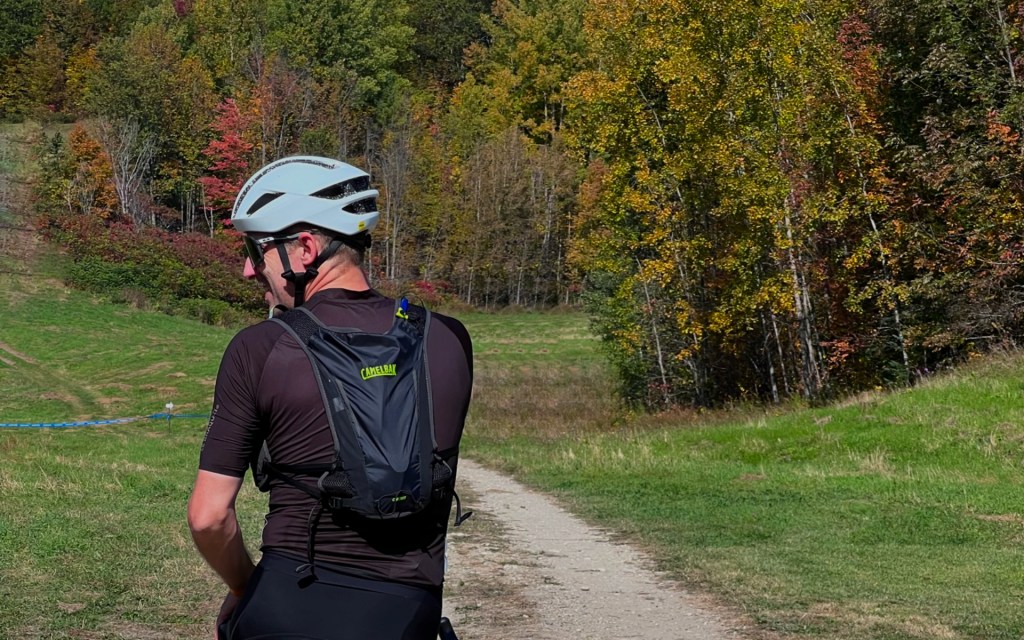
    The very first product to pop was the Circuit Run Vest with a 1.5L capacity. No pockets on the back portion (except for the one containing the reservoir). My search was on to a good start.

    Circuit Run Vest
    Circuit Run Vest Mesh and front pockets

    Also, the front pockets looked easily accessible and there is even an additional pocket with a zipper so I knew that was plenty of storage for my needs. More on the pockets later.

    Here are the specifications:

    • BPA/BPS/BPF Free
    • Material : Recycled N70D Ripstop with C0 DWR
    • Size: 35 x 21 x 11 cm / 13.8 x 18.3 x 4.3 in
    • Pack Weight: 360 g / 12.7 oz.
    • Hydration Type: Crux® 1.5L Reservoir
    • Gear Capacity: 5.5 L
    • Hydration Capacity: 1.5 L

    I’ll say this, the fact that Camelbak mixes metric and non-metric units to specify the capacity of their products probably weighted in my decision to pick the Circuit Run Vest. I knew I was purchasing the equivalent of 3 water bottles (I usually run 550/620ml bottles). And I can not be bothered with onces.

    So now, I can start any gravel ride with the equivalent of 5 water bottles, which for me is about 5 hours of riding. It gives me the flexibility to empty both my water bottles and kind of pick when I fill them back up, potentially avoiding long queues at water stations.

    Sounds like a win.

    The fit and the feel of the Circuit Run Vest

    Both shoulder straps are adjustable in length of course. I am not sure yet where the pack feels best when riding, but the straps are plenty long and I plan on cutting them once I find the right fit.

    The chest straps are not the most meaty. In fact, they are pretty thin and I guess someone who runs would prefer the lightness of those straps over sturdy and more cushioned ones. I found that a bit annoying at first but quickly forgot about those when I was riding. In fact, I don’t use both so maybe I’ll cut the one I am not using as well.

    The Mesh of the shoulder straps and backing of the pack is good enough that you forget about it. I tried it on a hot summer day and I did not feel like I was carrying a toaster on my back. Seems like the cooling effect of the mesh works. Another win.

    Speaking of the Mesh, it’s not the most comfortable material to feel against your skin, and if you wear a light jersey, you might feel it a bit. Once you start riding, I believe you’ll forget about it quite fast, unless there is a real comfort issue or chafing. But I felt like it was comfortable enough, especially for an entry level, minimal hydration pack.

    Maybe one day I’ll try some of the fancy stuff, but for now the Camelbak Circuit Run Vest is perfectly fine for me.

    Storage

    Aside from the 1.5L reservoir, I did not really test the packs’ storage. I bought it because it has pockets on the shoulder straps and this is what I tested.

    The left shoulder strap has an extra zipped pocket in which Camelbak suggest you put your phone. I mean, yeah, sure. It’s a secured pocket, put anything you want in there. My phone with the case did not fit well enough and it would have been challenging to take it out while riding. I like to film stuff while I ride, sometimes I even get good enough videos for a cute reel or an instagram story.

    Both shoulder straps have a pocket to put your food, gels, tabs etc. and are probably deep enough to store a Banana. I’d say it’s the feature that annoyed me the most.

    The pockets are too deep. It’s quite challenging to reach anything that gets at the bottom, like half a clif bar, or the lonely leftover energy chew that you really need on that last 30 minute push to the finish line.

    So here I am thinking about how to adapt or modify those pockets. Maybe I just need to adapt how I store my food. Remember those reusable gels bottles that you could fill up with Energy gel sold in 1L containers? I have not seen gel sold in bulk for quite a while now, but that sounds like something I could do.

    One pocket for the gel bottle, one pocket for the bars and snacks.

    Overall, I believe there is plenty storage available and that if you need more, the Bike oriented packs might be the way to go.

    What about the hydration function?

    Well, if you fill the reservoir with water, you can drink that water. Fancy!

    In fact, I believe this is where Camelbak has made nice improvements over the years.

    • The Hydration hose is easily accessible and can be installed on either shoulder straps.
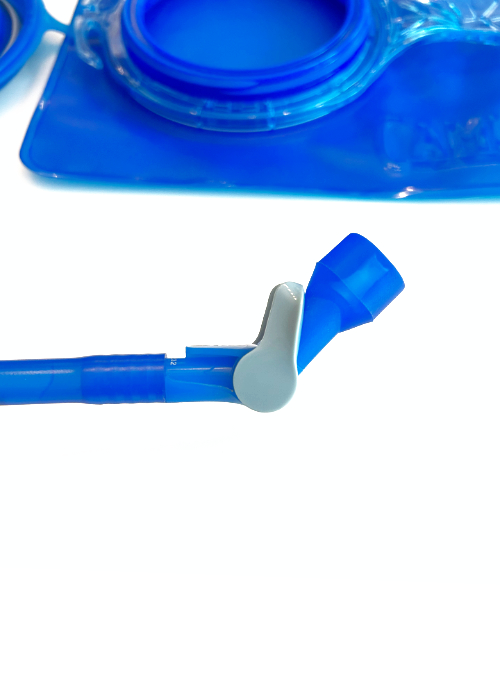
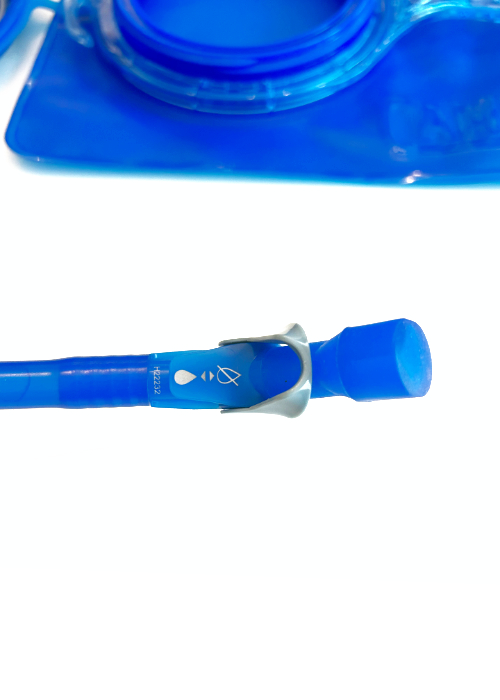
    • The valve that allows flow is easy to activate. No more fiddling with a tiny lever on a gummy spout. It is sturdy and gives a clear feedback on whether the thing is in one position or the other. There is a visual indication as well, but hopefully you wont have to look at that while riding.
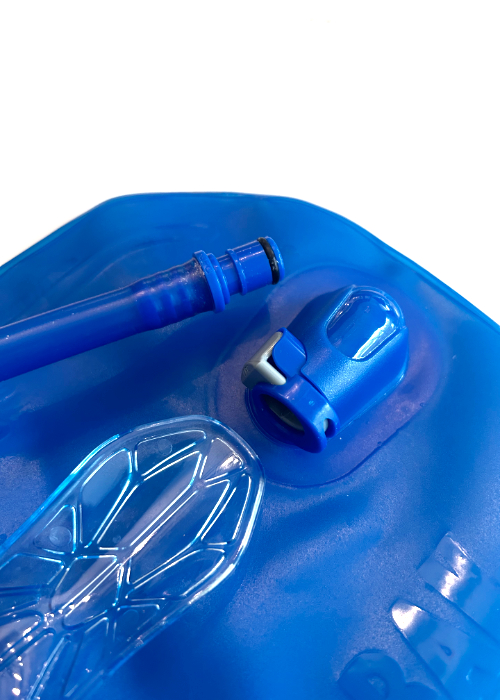
    • The Crux Reservoir is easy to open and fill up. It is equally easy to open for cleaning. That is a major win over the older reservoirs.
    • You can easily remove the hose from the reservoir for cleaning.

    Bells and whistles

    Like a lot of adventure packs and backpacks, the Circuit Run Vest has loads of small straps and loops that allow you to hang or clip stuff. I have no idea what, but I am sure there are creative and functional ways to use those bits.

    And there is also a whistle! Surprisingly loud enough to annoy someone beside you, not sure if it would be helpful in an emergency situation, but it’s there. I’d rather have it than not.

    Final words

    I wanted a light hydration pack, capable of carrying a small amount of food and gels, maybe car keys and add enough hydration capacity to my setup so I can be autonomous and not rely on feed stations.

    I found exactly that with the Circuit Run Vest.

    Pros:

    • inexpensive
    • adequate
    • no nonsense features
    • easy to clean reservoir
    • available spare parts

    Cons:

    • lacks something of a premium feel
    • Shoulder straps might not fit taller/larger people
    • not easy to remove or equip while riding
    • the hose is very rigid
    • Colors are boring!

    if you are looking to get your first hydration pack for gravel events, and maybe have one for running as well, this might be it! It’s lightweight and has enough features to get you through most bike rides if you have other storage solutions already equipped on your bike.


    * I purchased the Circuit Run Vest with my money, from my local bike shop and my opinion is based on my riding experience alone.